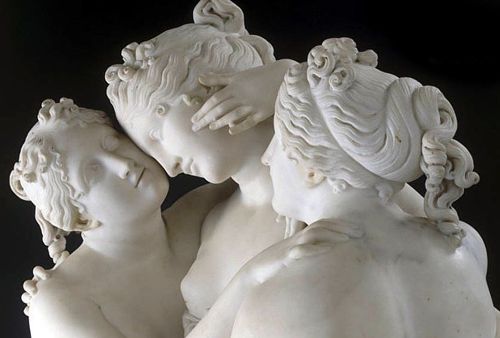
In the firmament of mythology, there exists a constellation of figures whose light lies not in destructive power or martial glory, but in the subtle, yet essential, vibration of amiability and beauty. They are the Three Graces, or Charites in the immortal language of the Greeks, and their legend is not one of conflict, but of perfect harmony. They are the rhythmic pulse of existence that celebrates the gift, the joy, and the radiant manifestation of grace. Their story is, in essence, the poetry of life itself, distilled into three female forms whose embrace has been perpetuated through the centuries.
Romanticism, which flourished approximately between the late 18th century and the mid-19th century, was not just an artistic fashion; it was a cultural revolution that encompassed literature, music, and, of course, painting. It was born as a passionate reaction against the cold logic, strict order, and rationality imposed by Neoclassicism. If the Neoclassicists sought perfection in symmetry and the rules of Greco-Roman antiquity, the Romantics sought truth in a much deeper and more turbulent place: sentiment, imagination, and uncontrollable emotion.
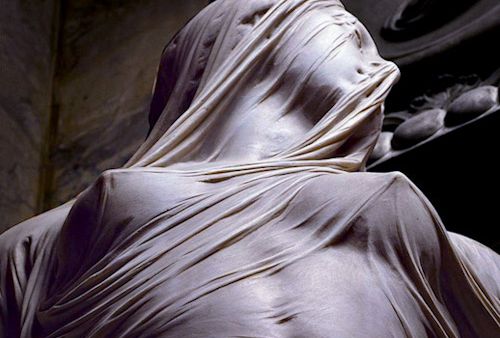
En el corazón de la enigmática Capilla Sansevero de Nápoles, una figura de mármol capta la luz con una fragilidad casi imposible: La Modestia (Pudicizia), también conocida como La Modestia Velada o Castidad Velada. Creada en 1752 por el escultor veneciano Antonio Corradini, esta obra no es solo un testimonio del virtuosismo barroco, sino la pieza central de un profundo y personal drama familiar envuelto en un velo de filosofía oculta.
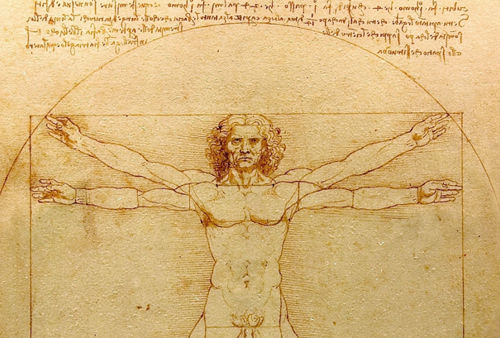
There are universal images that form part of our collective history, and one of the most iconic is undoubtedly Leonardo da Vinci's The Vitruvian Man. This illustration, repeated and reinterpreted throughout the centuries, is much more than a simple drawing: it is a symbol of the intrinsic connection between art, science, and philosophy. Created around 1490, this work reflects not only Leonardo's insatiable curiosity but also his commitment to the search for perfection and the universal laws that govern both the human body and the universe.
Once upon a time, there was a giant, a Titan, who made a decision that would forever change the destiny of humanity. He dared to steal a tiny bit of the sacred fire from the Olympian gods. The gods, by their very nature, possessed everything in large quantities, but Prometheus took that fire—that knowledge, that spark—and gifted it to humans, who, in their initial state, lacked even the most essential things for survival.
When we think of Gustav Klimt (1862-1918), the color gold immediately comes to mind. His canvases, more than paintings, look like gigantic jewels, shimmering mosaics that merge the human figure with abstract patterns and metallic flashes. But this love for gold was neither accidental nor a passing fad; it was a direct inheritance, a vocation forged in his childhood workshop. To understand the artistic revolution that Klimt led in Vienna, we must first get to know the man who dreamed in gold.
Friné fue una notable hetaira, o cortesana, de Atenas, que ha sido recordada a lo largo de los milenios por un dramático juicio que ganó al ser desnudada ante los jueces. Su nombre real era...
Desde tiempos antiguos, el hombre ha buscado en la música no solo un entretenimiento, sino un lenguaje secreto que conecta lo terrenal con lo divino. En el murmullo de una lira, en la vibración de...
Las Musas, inspiradoras de la creatividad y el conocimiento, tienen su origen en la mitología griega, donde se las considera diosas que encarnan la gracia y el genio de las artes y las ciencias...
En 1814 , Caroline, la hermana de Napoleón Bonaparte, encargó al artista Jean-Auguste-Dominique Ingres la Gran Odalisca . La mujer se había casado con el mariscal Joachim Murat, convertido en rey de...
El tema de la "Psique desmayada" está tomado de un episodio de las "Metamorfosis" de Apuleyo, principal fuente literaria del mito, en el que se dice que Psique, una niña mortal, se une con Cupido, hijo...
Durante milenios, las Pléyades, también conocidas como las Siete Hermanas han sido inmortalizadas en el famoso cúmulo estelar del mismo nombre, han sido objeto de asombro y fascinación en todo el...
La Venus de Victrix presenta a Venus en una pose clásica y serena, con una expresión que combina dulzura y dignidad. La diosa está representada de pie, con su cuerpo ligeramente girado y el rostro...
Confianza en Dios es, por mucho, la obra más conocida de Bartolini, emblemática de la escultura italiana de la generación posterior a Canova". Las representaciones de Venus y otros personajes que...
Sumérgete en un viaje emocionante donde la creatividad y la belleza artística se fusionan para dar vida a narraciones atemporales que siguen cautivando al mundo moderno. Desentrañamos los secretos ocultos detrás de estas obras icónicas y te llevamos en un recorrido único por la intersección entre mitología y genialidad artística.¡Déjate inspirar por la riqueza cultural que perdura a través de los siglos !