
Select your language

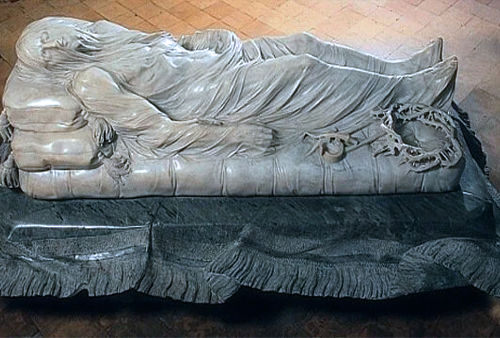
Imagine you walk into a small chapel in the heart of Naples. Outside, the city is noise: narrow alleys, voices bouncing off the walls, laundry hanging from balcony to balcony. Inside, suddenly, silence. You walk slowly and, in the center of the nave, you see a body lying down, covered by a shroud.

This woman is not dreaming. She is being crushed. Look closely. She hangs off the bed, her head thrown back and her arms limp, as if her body no longer belonged to her. On her chest sits a small, heavy, motionless creature. And it is staring at you. At you. Throughout history, dreams have been read in many ways. The ancient Egyptians believed they were messages from the gods.
Read more … Fuseli's Nightmare: The Incubus That Watches You
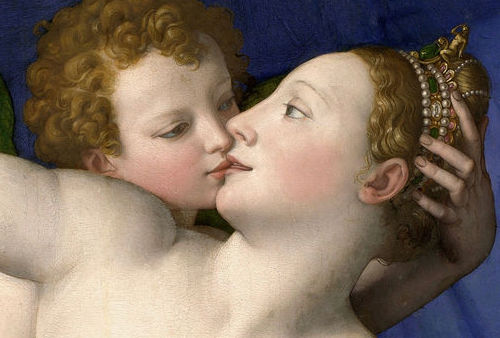
In the light of a mysterious glow, two figures emerge from the shadows in an intricate embrace. A pale, radiant woman leans toward a young man with golden curls, their lips barely centimeters apart, in a frozen moment that seems both fragile and immortal. Around them, in a disquieting display, enigmatic figures watch, hide and reveal, holding symbols that look like warnings and prophecies, such as Folly and Time.
Read more … Venus, Cupid, Folly, and Time: Allegory of the Triumph of Venus
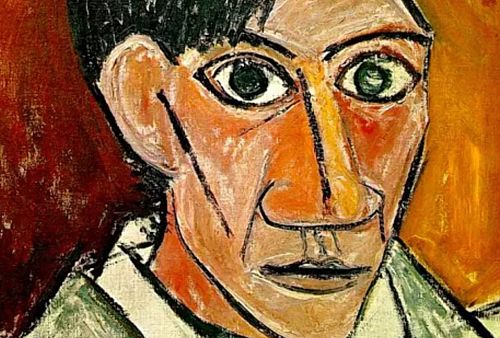
Picasso never painted in the same way twice. Perhaps that is one of the best ways to approach him. Not as the man who invented a particular way of painting, nor as the artist who one day decided to break the rules forever, but as someone who seemed to have an almost permanent need to change the way he looked at the world.
Read more … Picasso: The Man Who Never Stopped Looking at the World Differently
Page 1 of 16
Estamos ahi, igual que tu !


 Sumérgete en un viaje emocionante donde la creatividad y la belleza artística se fusionan para dar vida a narraciones atemporales que siguen cautivando al mundo moderno. Desentrañamos los secretos ocultos detrás de estas obras icónicas y te llevamos en un recorrido único por la intersección entre mitología y genialidad artística.¡Déjate inspirar por la riqueza cultural que perdura a través de los siglos !