

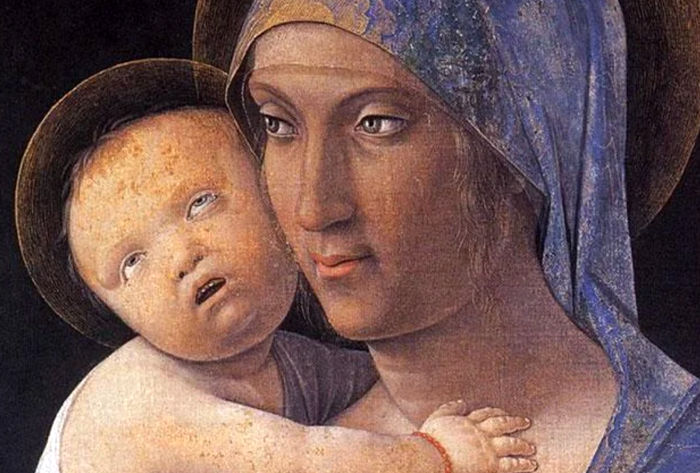
If you've ever walked through a museum and stopped in front of a medieval painting featuring a baby, you probably noticed something unsettling. That baby doesn't have chubby cheeks or an innocent gaze. It has the face of a fifty-year-old man after an exhausting workday: a receding hairline, deep forehead wrinkles, and an expression that seems to say he's tired of life.
The question comes up immediately: did medieval artists simply not know how to draw children, or was there something more behind these strange figures?
A secret hiding in plain sight
The answer is no, it wasn't poor technique. Everything was completely intentional, and the key lies in a Latin concept few people know: the homunculus, which literally means "little man." To understand why medieval artists painted babies with the face of an old man, you first need to understand what art was made for in that era.
In the Middle Ages, a painting wasn't created to decorate a room or to be pleasant to look at. Art served a religious and educational purpose: it taught doctrine to a population that, for the most part, couldn't read. And within that purpose, there was a very strict theological idea about the central figure of the entire belief system: Jesus Christ.
A Jesus who was never really a baby
For the theologians of the time, Jesus was the son of God, a perfect, unchanging being endowed with infinite wisdom from the very moment of his birth. The idea of a helpless Jesus, crying from colic or drooling like any newborn, amounted to something close to blasphemy. That image didn't fit with that of an all-powerful savior who had existed since the beginning of time.
For that reason, artists received an implicit but firm instruction: they had to portray Jesus as a miniature adult man. A being who already knew everything, who had the maturity of a sage, and who therefore also had to have the physical features of an elderly philosopher, even if his body measured barely forty centimeters. It wasn't a mistake in proportion or anatomy: it was a deliberate symbolic decision.
When the model spreads to everyone else
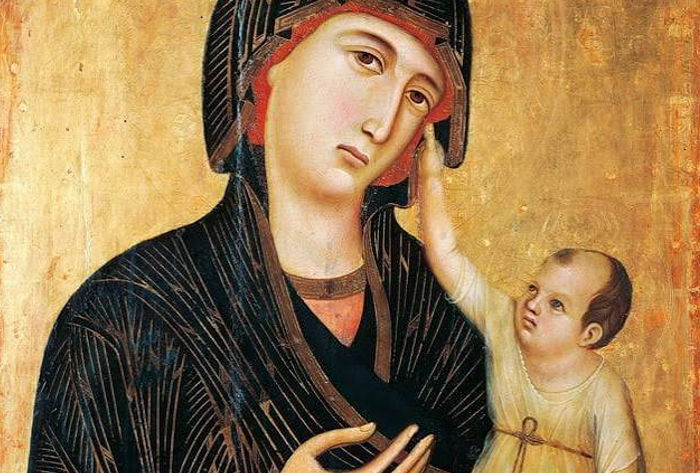
What's interesting is that, since Jesus was the central figure of all the religious art of the time, the way he was portrayed ended up setting the standard for any other baby that appeared in a painting. It didn't matter whether it was a nobleman's son, an angel, or a secondary scene in the background of a painting: if there was a baby, that baby had to look like a small adult.
Add to this another key factor: in the Middle Ages, the modern concept of childhood as we understand it today didn't even exist. Children were simply seen as adults who hadn't yet finished growing, not as a life stage with its own characteristics that deserved to be faithfully represented.
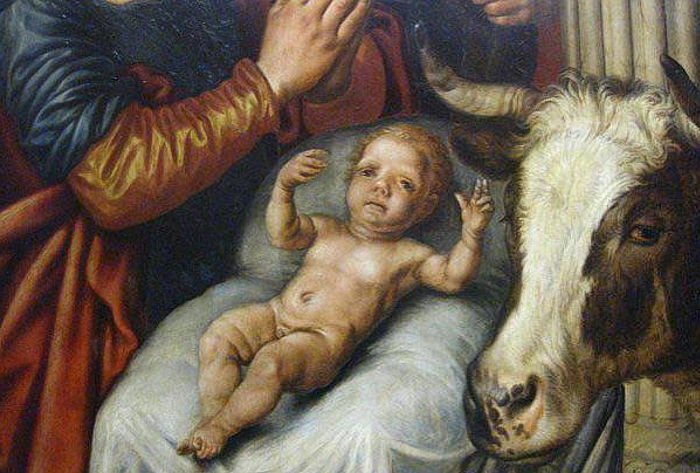
The problem wasn't only theological, it was also practical
Beyond the symbolic weight, there was a very concrete limitation in the craft of medieval painters: they didn't have a real baby posing in the workshop for hours on end. Most worked from memory or followed models established in religious texts and earlier manuscripts, copying visual formulas that were repeated from generation to generation.
Anatomical realism simply wasn't a priority. What mattered was the spiritual message the image conveyed, not how faithfully a human body was rendered. That's why these figures feel so unsettling to us today: we're applying a modern standard, visual fidelity, to a system of representation that followed completely different rules.
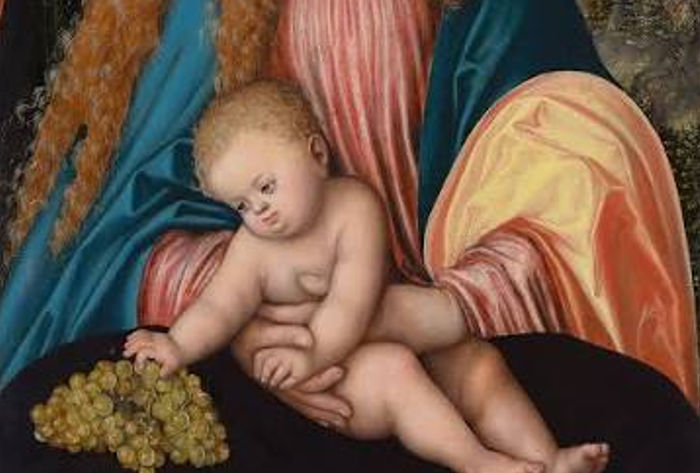
The Renaissance changes the rules of the game
This way of depicting babies remained largely unchanged for centuries, until the Renaissance arrived in the fifteenth century and completely transformed the way art and the human being itself were understood. European society rediscovered its interest in science, in anatomy, and above all, in humanism: a school of thought that placed the human being, not only the divine, at the center of the universe.
This shift in mindset also transformed the way families related to childhood. Nobles and wealthy families of the time were no longer satisfied with commissioning abstract religious paintings alone. Now they also wanted portraits of their own children, images that showed just how healthy, chubby, and beautiful those real children were.
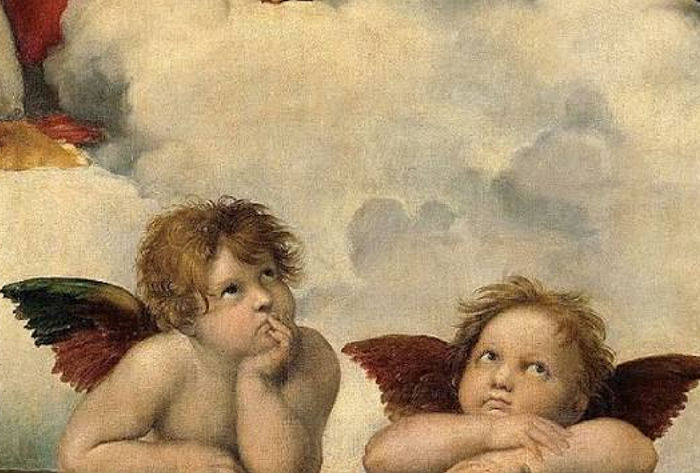
From "little men" to cherubs
Along with this new interest came a new way of working: Renaissance artists began observing nature with scientific attention, including infant anatomy. They discovered, almost like a revelation, that real babies have heads that are large in proportion to their bodies, soft rounded limbs, and faces completely free of wrinkles.
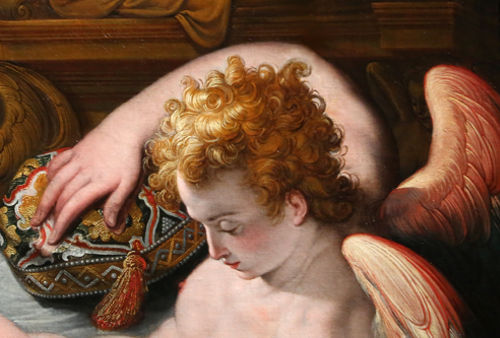
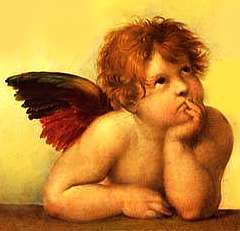
From one century to the next, the "little men" that had dominated medieval art were replaced by cherubs: those winged figures, round-cheeked and sweet-faced, that we automatically associate today with the idea of an "angelic baby" in art. That shift wasn't merely aesthetic, it was the visual reflection of a much deeper revolution in the way Europe understood human beings, childhood, and family.
So the next time you come across a medieval baby who looks about ready to file for retirement, resist the urge to laugh at the painter's lack of skill. What you're actually looking at is the result of centuries of theology, philosophy, and a way of understanding the world radically different from our own: an era in which art wasn't trying to resemble reality, but to explain a truth that, for those who created it, mattered far more than any physical resemblance.