

She was 17 years old. She lived in Rome. And the world she knew was about to be destroyed in a way no young woman should ever experience. Artemisia Gentileschi did not choose to be a symbol. She did not choose to be an example. She chose to survive. And in that survival she created one of the most powerful and most honest bodies of work in the entire history of art.
This is her story. Not the softened version. The real one.
The Crime and the Trial
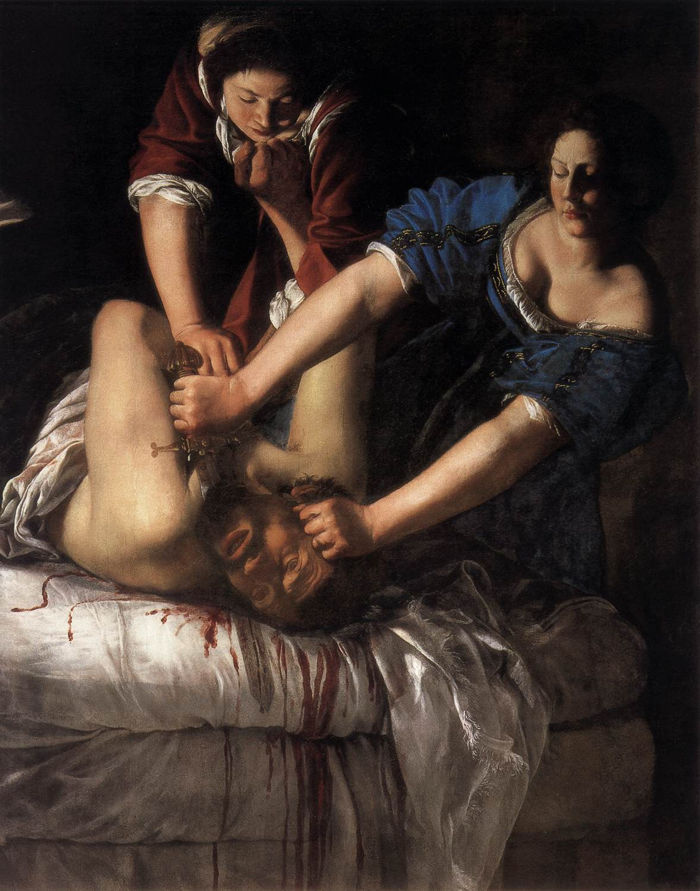
In 1611, Agostino Tassi, a painter and collaborator of her father Orazio Gentileschi, raped Artemisia in her own home. Tassi was a man of the world, with connections and a reputation to protect. Orazio reported him, not so much out of a sense of justice but because in that era the rape of an unmarried daughter was considered damage to family property.
The trial lasted seven months. And what happened in that courtroom is one of the darkest episodes in the history of art and of justice. To verify that Artemisia was telling the truth, the judges ordered her subjected to the sibilla, a torture device that compressed the fingers with cords. While they tightened the cords around her hands, she kept repeating the same thing.
It was true. It is true. And it will always be true.
Tassi was convicted. He served less than a year in prison. Artemisia carried the stigma for the rest of her life.
What the Brush Did with the Pain
There are artists who flee from their experience. And there are artists who turn it into fuel. Artemisia belonged to the second group with an intensity that still impresses today.
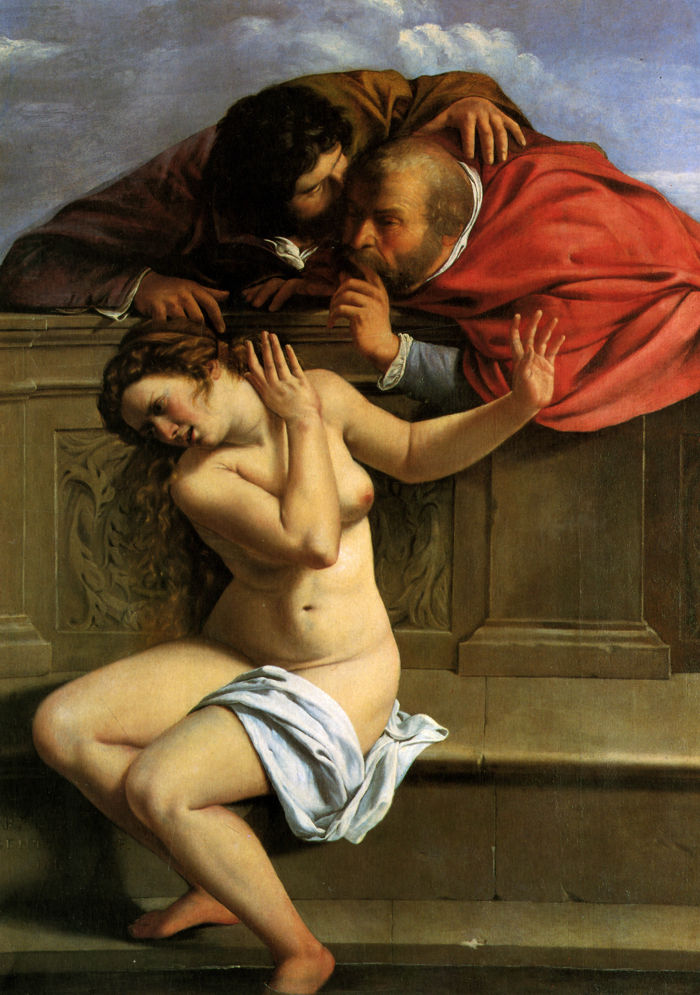
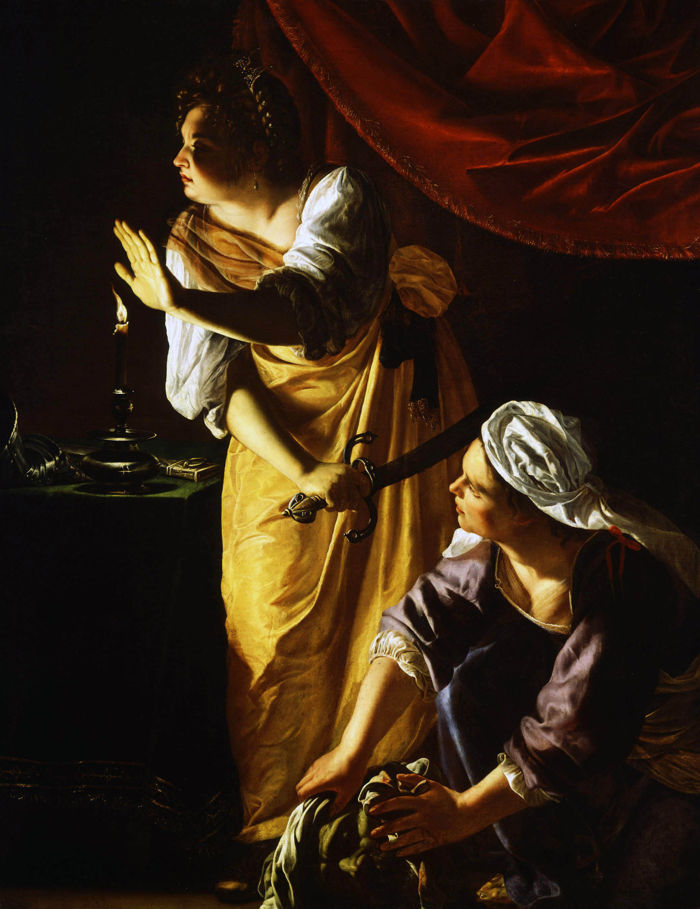
Shortly after the trial she painted her first version of Judith Slaying Holofernes. The comparison with Caravaggio's version, her great reference point, is inevitable and revealing. Caravaggio painted a hesitant Judith, almost uncomfortable with what she is doing. Artemisia's Judith does not hesitate. Her arms have strength. Her gaze has determination. There is something in that image that goes beyond technique.
It was not just a biblical scene. It was a declaration.
A Woman in a Man's World
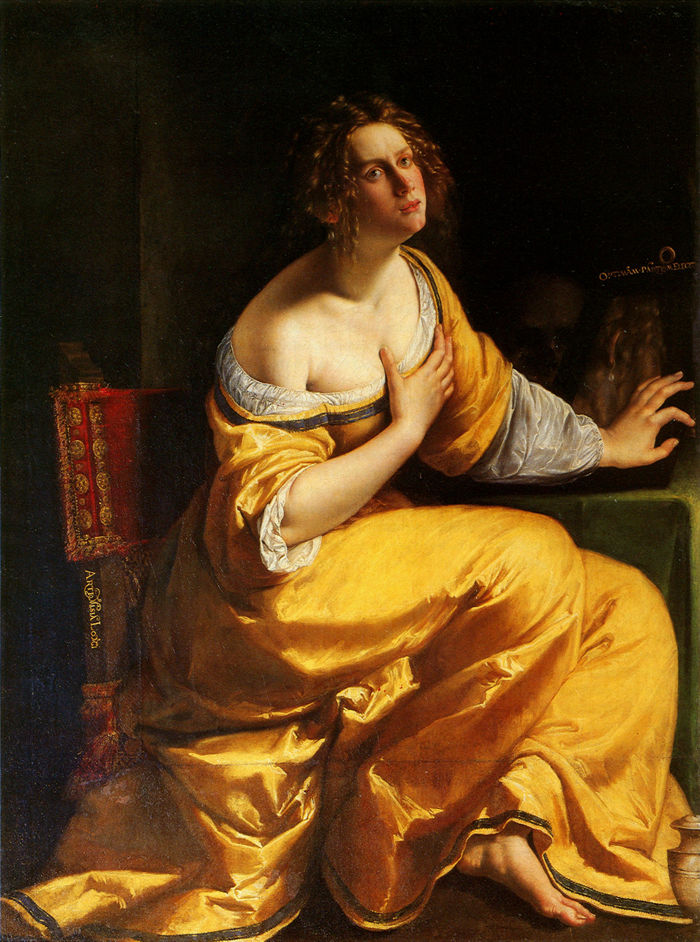
Artemisia grew up in her father's workshop, learning the craft from childhood. She had exceptional talent that Orazio recognized and cultivated. But the art world of the 17th century was not designed for women. They could not attend academies. They could not study anatomy with male models. They could not move freely through cities to seek commissions.
And yet Artemisia became the first woman admitted to the Accademia delle Arti del Disegno in Florence, in 1616. An achievement that in any other context would have been simply extraordinary. In hers, it was almost a miracle.
She married a Florentine painter, Pietro Antonio di Vincenzo Stiattesi, and moved to Florence. The marriage was more a social solution than a love story, but it gave her mobility and respectability. And in Florence she found something Rome had denied her: a city willing to recognize her talent.
The Women She Painted
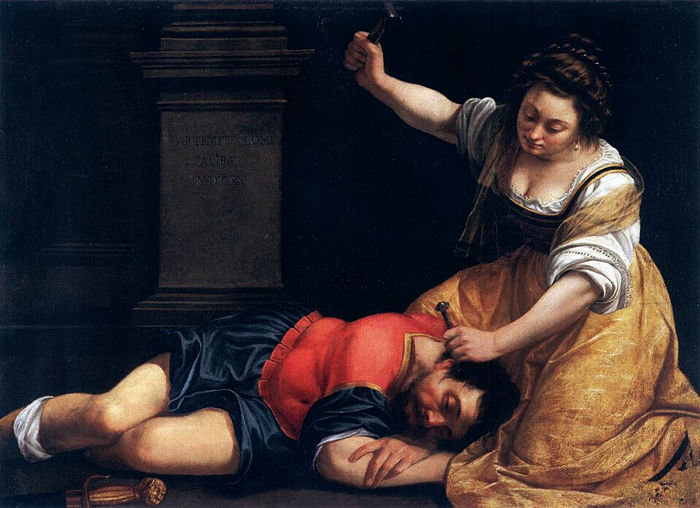
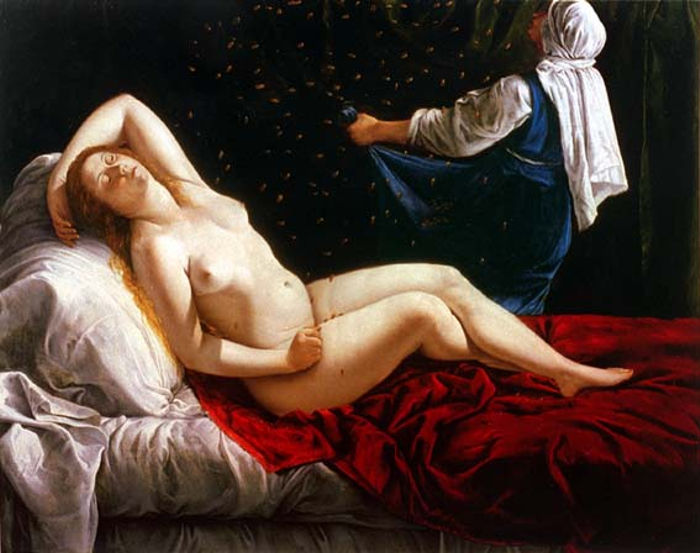
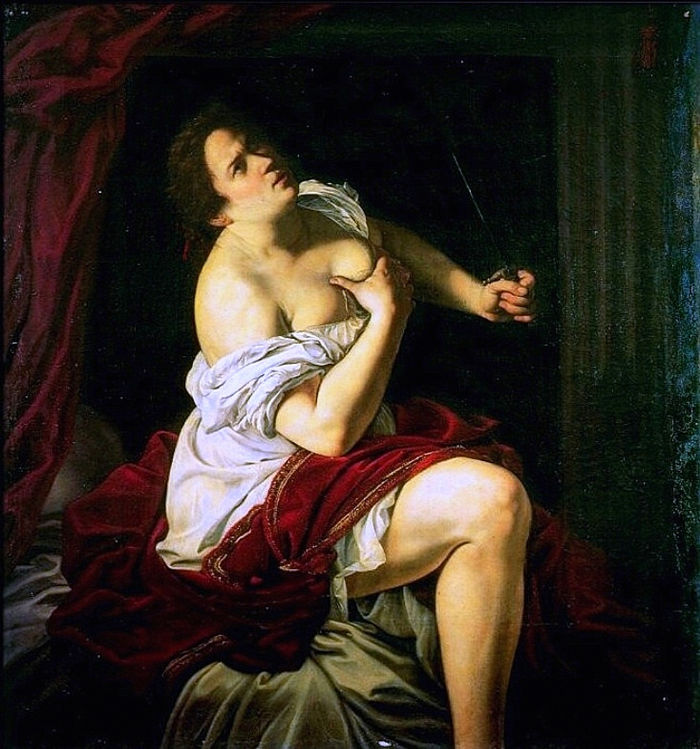
Artemisia's work is, to a large extent, a catalogue of women who act. Judith, who saves her people by beheading the enemy general. Susanna, harassed by the elders who observe her without consent, painted not as an object of desire but as an indignant victim. Cleopatra, who chooses her own death before humiliation. Lucrezia, who drives a dagger into herself before losing her honor.
In a century where women in painting were almost always objects, muses, decorative victims, Artemisia painted them as subjects. With will. With strength. With a psychological interiority that her male contemporaries rarely granted them.
It was not coincidence. It was a direct consequence of her experience. She knew what it was to be judged, exposed, reduced. And she refused to reproduce that gaze in her work.
Florence, Venice, Naples, London
After Florence, Artemisia kept moving. Rome, Venice, Naples, where she spent most of her artistic maturity. In Naples she developed her own workshop, received important commissions and maintained correspondence with the most influential collectors and patrons in Europe.
She even reached London, summoned by King Charles I of England, where she collaborated with her father Orazio on the ceiling decoration of the Queen's House in Greenwich. It was one of the most prestigious commissions an artist could receive at the time. And she was there.
Her correspondence with collector Antonio Ruffo reveals a woman perfectly aware of her worth and willing to defend it. In a famous letter she wrote that the price of her work was the same as any man of her level. And that if he wanted to pay less, he could find another painter.
She did not apologize for existing. She did not ask permission to charge what she was worth.
Forgotten and Rediscovered
Like Vermeer, like so many others, Artemisia fell into oblivion after her death. For centuries her works were attributed to her father, to other painters, to anyone but her. The art world struggled to accept that a woman could have painted with that strength and that precision.
It was the 20th century that rescued her. Feminist criticism in the seventies rediscovered her as a key figure, and since then her reputation has done nothing but grow. Today her works are fought over at major international auctions. Her exhibitions generate queues. Her books sell out.
But beyond the art market, what makes Artemisia remain relevant is something simpler and deeper: her work speaks. It speaks of resistance, of dignity, of the capacity to transform pain into something that lasts centuries.
What Her Paintings Say Today
There is a reason why Artemisia Gentileschi resonates especially in this historical moment. It is not only that she was a woman in a man's world. It is not only that she survived a brutal injustice. It is that she did not let that injustice define her in silence.
She took it. She processed it. She turned it into art that four centuries later still unsettles, still moves, still challenges.
Her women do not wait to be rescued. Her women act. And in that pictorial gesture, repeated again and again throughout her entire career, there is an affirmation that needs no additional words.
Artemisia Gentileschi did not paint pictures.
She painted what it means to never give up.
THE WORK
Artemisia Gentileschi
Born in Rome, 1593
Died in Naples, circa 1656
Style: Baroque, Caravaggism
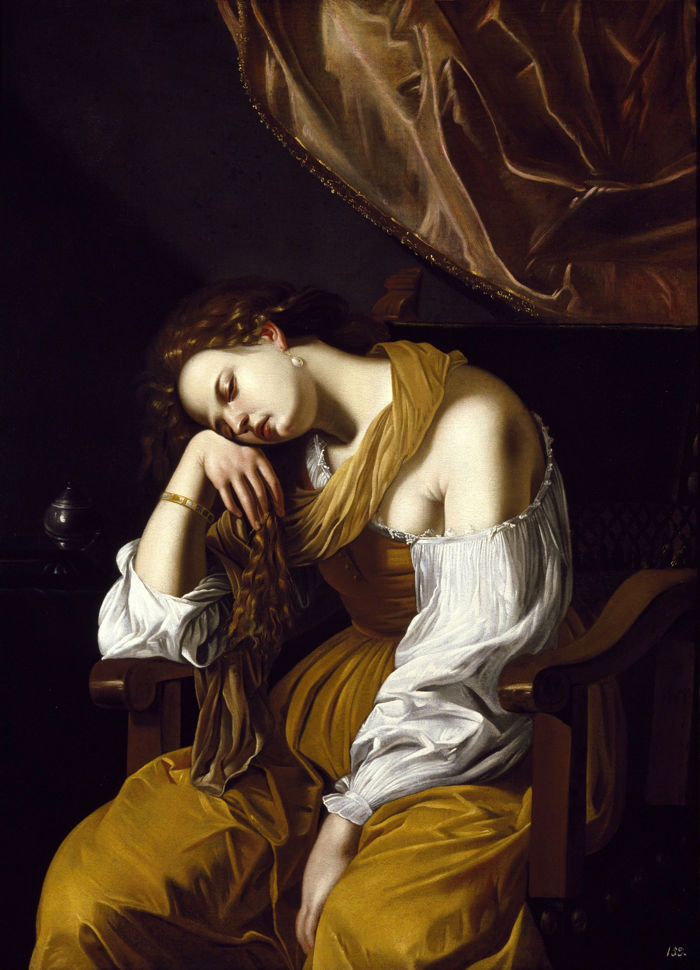
Notable works: Judith Slaying Holofernes, Susanna and the Elders, Cleopatra, Lucrezia, Aurora
Collections: Uffizi (Florence), Museo di Capodimonte (Naples), National Gallery (London), Museo del Prado (Madrid)