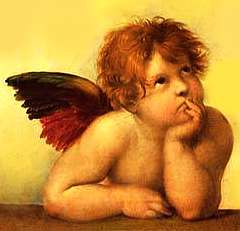


In a previous exploration of the wonders and oddities of classical visual art, we paused to observe a phenomenon as bewildering as it is fascinating: Renaissance babies looked like forty-year-old men with outstanding debts, crowned with prematurely tired expressions and receding hairlines that defied all infantile logic.
However, if you thought human beings came off poorly under the brushes of old masters, why did animals in ancient art look like they were pulled straight out of a nightmare or a horror movie?
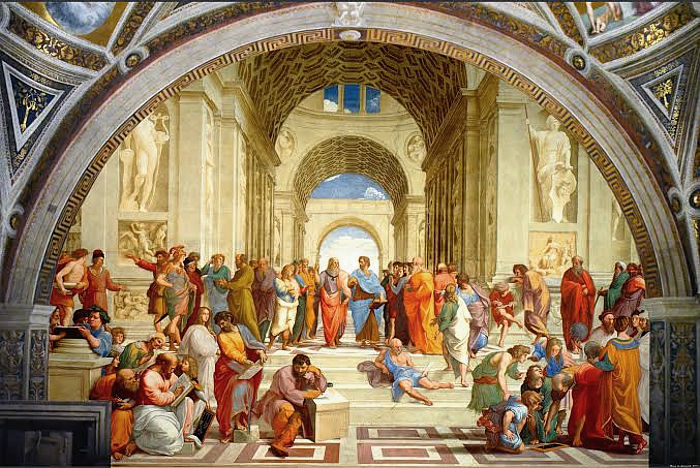
Rest assured. If you look closely at a medieval cathedral, a Florentine fresco, or a 16th-century altarpiece, you quickly realize that the painter possessed an insurmountable technical mastery over perspective, volume, chiaroscuro, and the folds of silk drapery. The problem was never a lack of skill or technique; it was strictly a matter of a deeply rooted ideology within their historical context.
To understand why cats and dogs were depicted in such peculiar ways, one must dive into the mindset of the era. In past centuries, the Church used visual art as a mass indoctrination tool for a largely illiterate population. Religious imagery did not aim for photographic realism or aesthetic beauty for mere decorative whim; its primary purpose was the transmission of moral lessons, vices, virtues, and spiritual truths. In this sense, art functioned as a complex theological code easily understood at a glance by the average churchgoer.
The Great Moral Divide of Pets: Loyalty versus Shadow
And it is precisely here that the great moral division of domestic pets enters the collective imagination of the Renaissance.
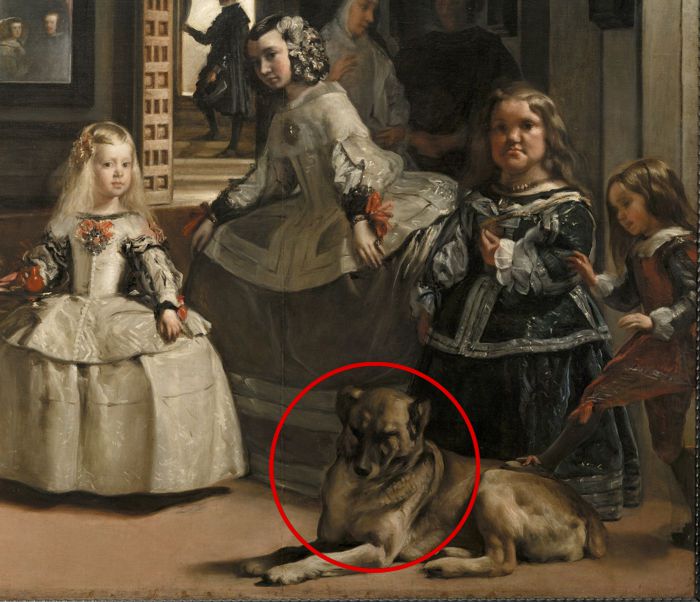
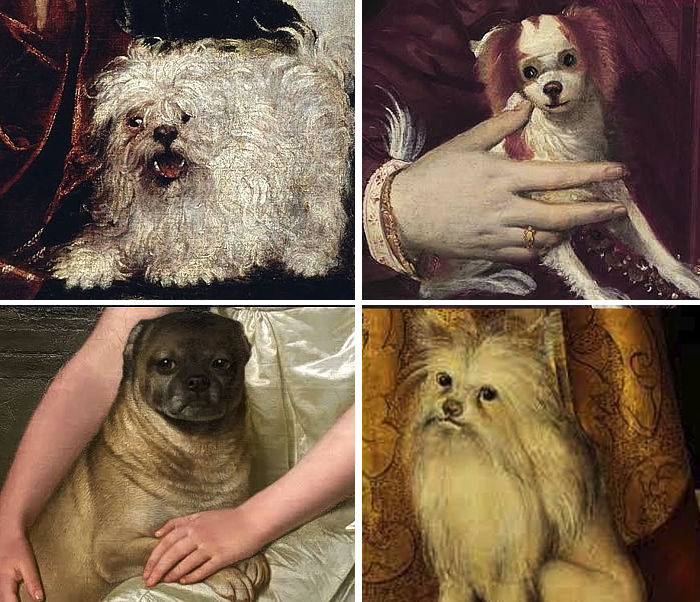
On one hand, we find the dog. The dog of the aristocracy and wealthy classes was the ultimate symbol of loyalty (Fides) and the steadfast protection of the faith. For this ideological and symbolic reason, artists portrayed it as noble, aesthetically beautiful, calm, and resting faithfully at the feet of saints, virgins, or the wealthy patrons who commissioned the artwork. The canine personified the virtue of the good Christian: faithful, submissive before the divine, and a guardian of the established order.
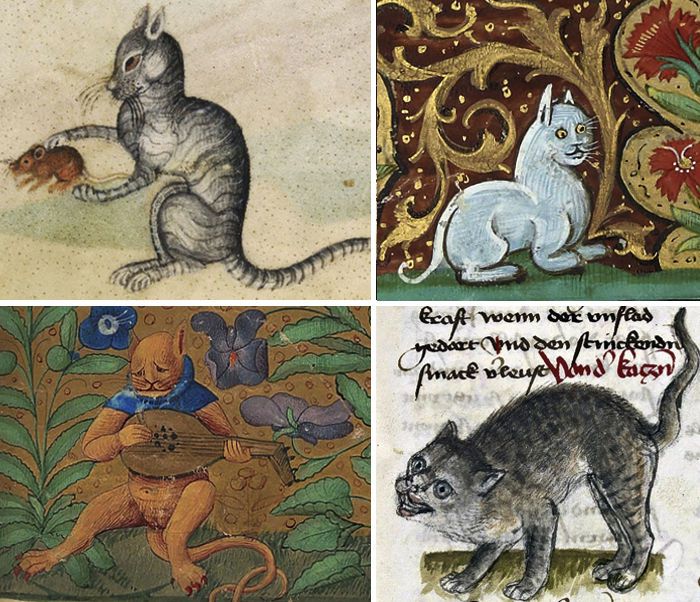
But what about the cat? The cat had lost the game right from the start. Following papal decrees and the ideological climate of the Late Middle Ages that linked it directly to dark forces, heresy, and witchcraft, the feline officially became the symbol of betrayal, hypocrisy, sloth, and falsehood. Painting a cute, soft, cuddly, or adorable cat in a religious or devotional context would have been equivalent to running direct advertising for the devil himself. For this artistic and doctrinal reason, creators deliberately distorted them: giving them goblin-like faces, cross-eyes, tense body postures, and psychopathic expressions to visually stigmatize sin in the viewer's mind.
Sacred Scenes with Sinister Guests
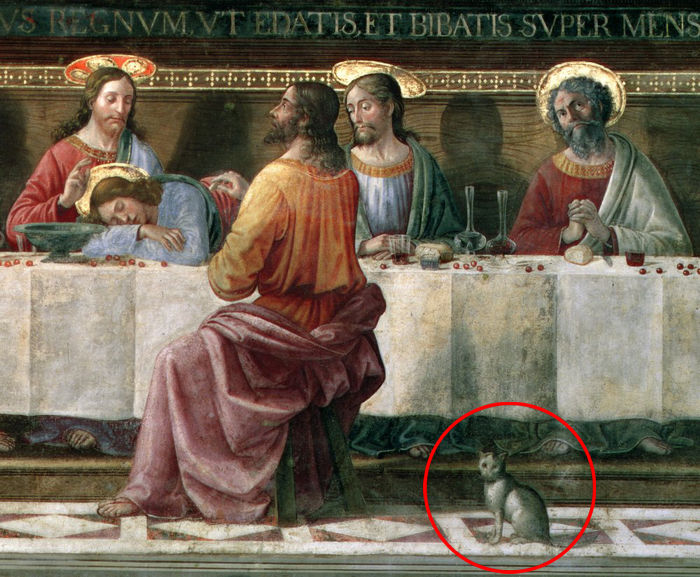
This ideological directive explains the existence of truly unhinged compositions within the Western canon. Consider for a moment traditional depictions of The Last Supper. In these scenes, Christ solemnly announces that he is about to be betrayed by one of those present, triggering absolute panic among the apostles. In some of these compositions, Judas Iscariot appears subtly separated from the main group, and right behind him glides a cat with a strangely unsettling appearance. The animal's body points directly toward the traitor, but its head twists at an unnatural, impossible angle to stare straight into the viewer's eyes with a cynical expression that seems to whisper: "Yes, it was us—what are you going to do about it?"
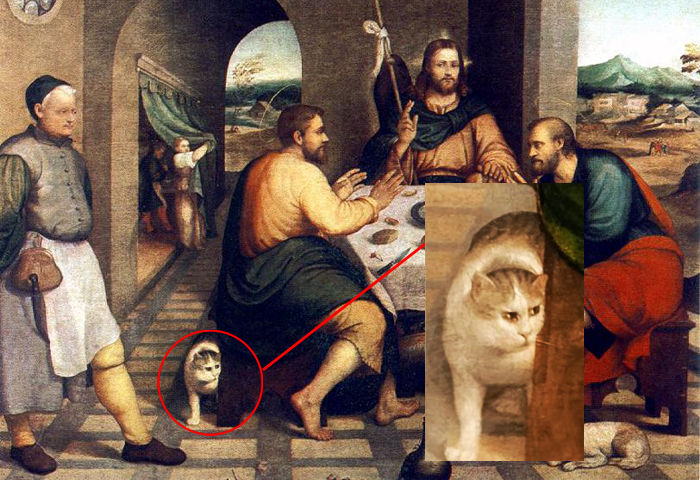
This resource is no isolated exception. In the altarpiece The Supper at Emmaus, a masterpiece by Jacopo da Ponte (Jacopo Bassano), the viewer's attention is inevitably drawn to an unusual element in the foreground: a cat. While the painting captures the sublime and miraculous moment of Christ's revelation to his disciples in the breaking of the bread, the presence of this feline has historically been interpreted in a deeply sinister light. The cat does not serve as a simple domestic genre detail; it acts as a symbolic representation of the "Evil One." While the disciples recognize the Savior, the feline embodies the latent presence of sin, betrayal, and demonic forces lurking in the shadows even during the most sacred moments of faith.
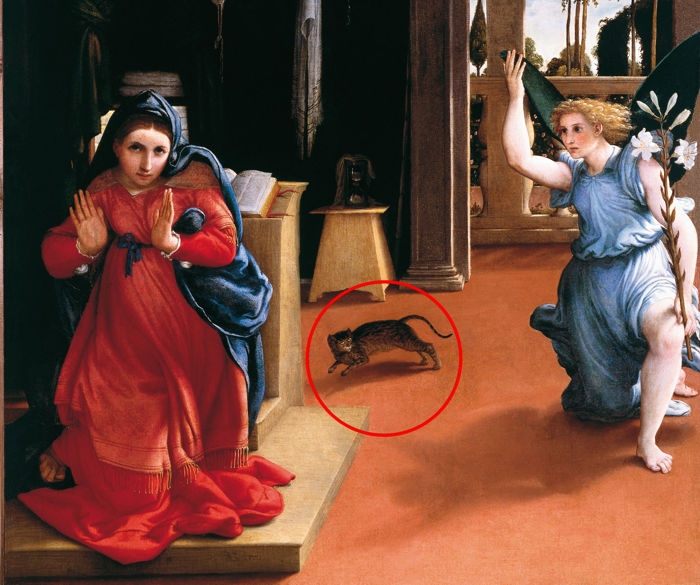
Another primary example is found in The Annunciation of Recanati by Lorenzo Lotto, which introduces an unusual and revealing detail: a terrified domestic cat. When the Archangel Gabriel suddenly bursts into the celestial room to announce the incarnation of the Savior, the feline reacts by dramatically arching its back and fleeing in terror. This is no ordinary pet startled by a sudden noise, but a profound theological symbol. In the iconography of the period, the cat embodied the evil one and the forces of darkness, which, terrified and powerless, flee in panic before the overwhelming light of divine revelation.
From Pet to Mythological Monster
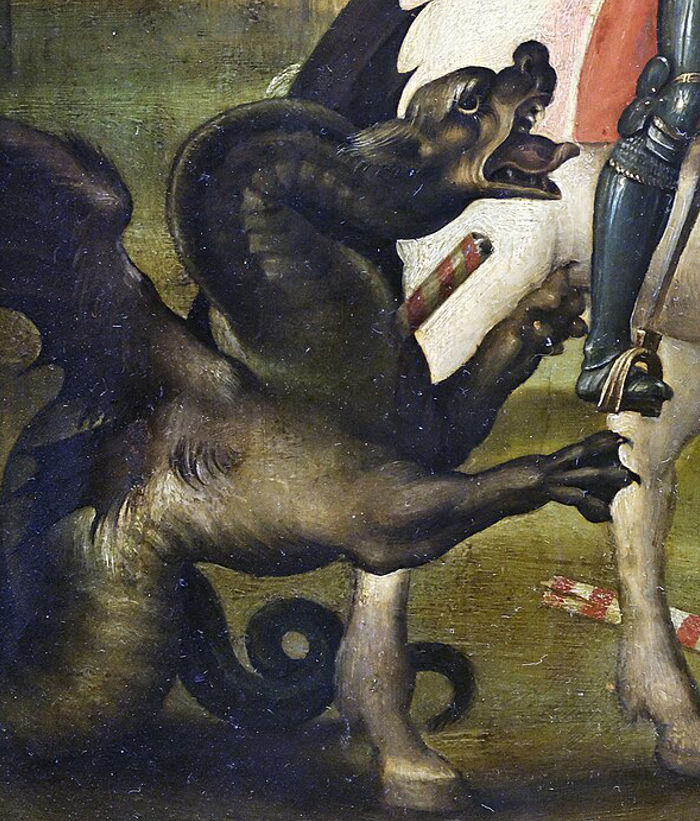
The logic of projecting evil through distorted animal features escalated when artists faced the completely unknown. What happened, for instance, when a Northern European painter was commissioned to depict a terrifying mythological dragon for a side altarpiece, having never seen such a creature in his life?
Lacking real zoological references, the creator inevitably turned to visual resources he already mastered and that the public associated with terror and moral vileness: he took the features of a rabid dog, added exaggerated slobber, oversized fangs, and a grotesque fury combined with feline agility. The resulting monster was, at its core, an accumulation of everyday terrors that visual culture had already categorized as abject.
An Ideological Marketing Campaign
The next time you visit an art gallery, take a virtual museum tour, or pause to contemplate a distorted monster, a demon with grotesque features, or a cursed-looking cat in a painting created five hundred years ago, remember this fundamental premise: it was not due to a lack of talent, technical clumsiness, or anatomical ignorance on the master's part.
We are standing before the visual remnants of one of the most structured, ideological, and deeply anti-cat communication, indoctrination, and marketing campaigns in Western art history. A fascinating reminder that, on the ancient canvas, even the smallest animal whisker carried the invisible weight of heaven and hell.